“The guitar was well packed and is set up to my liking! I would definitely do business with this company again!”
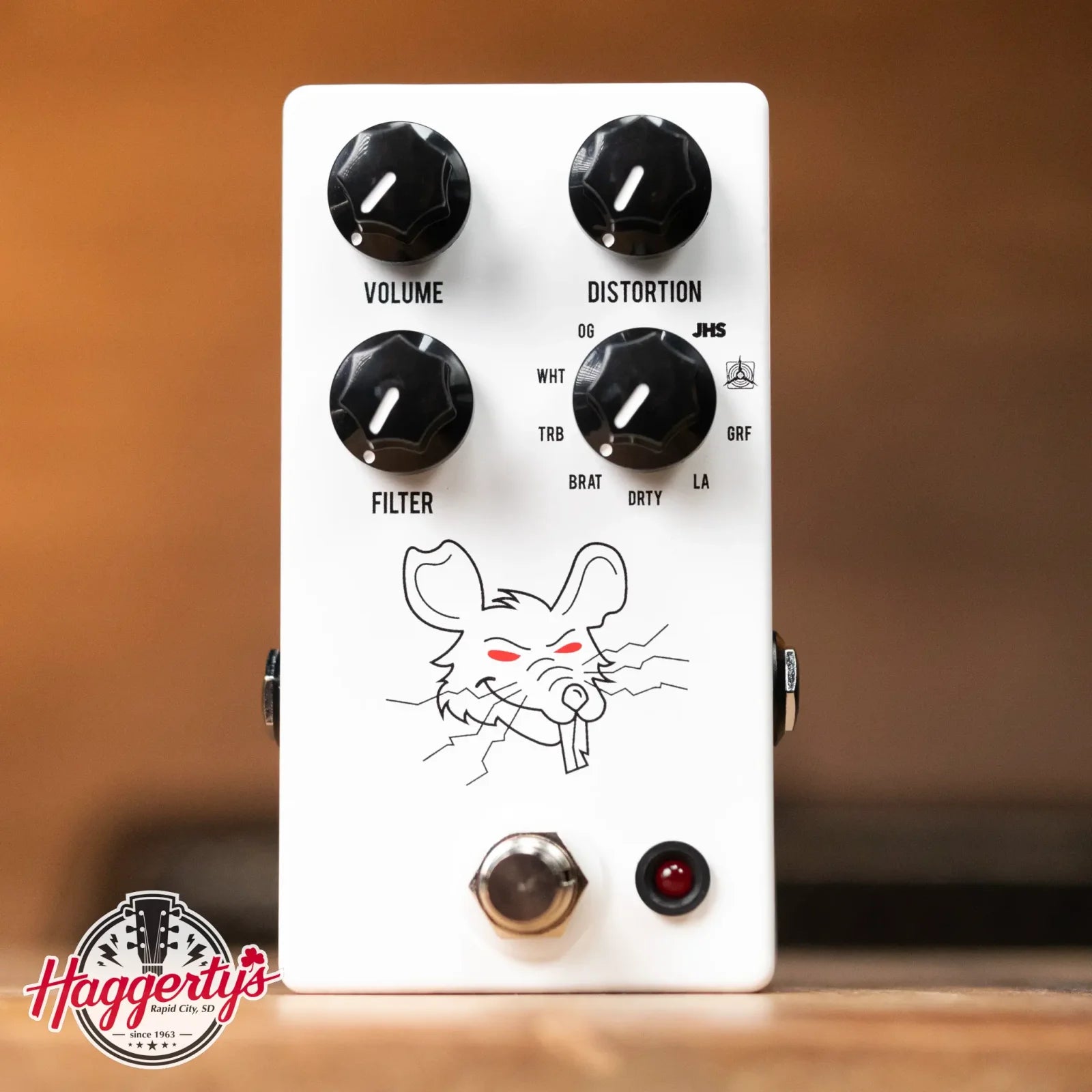
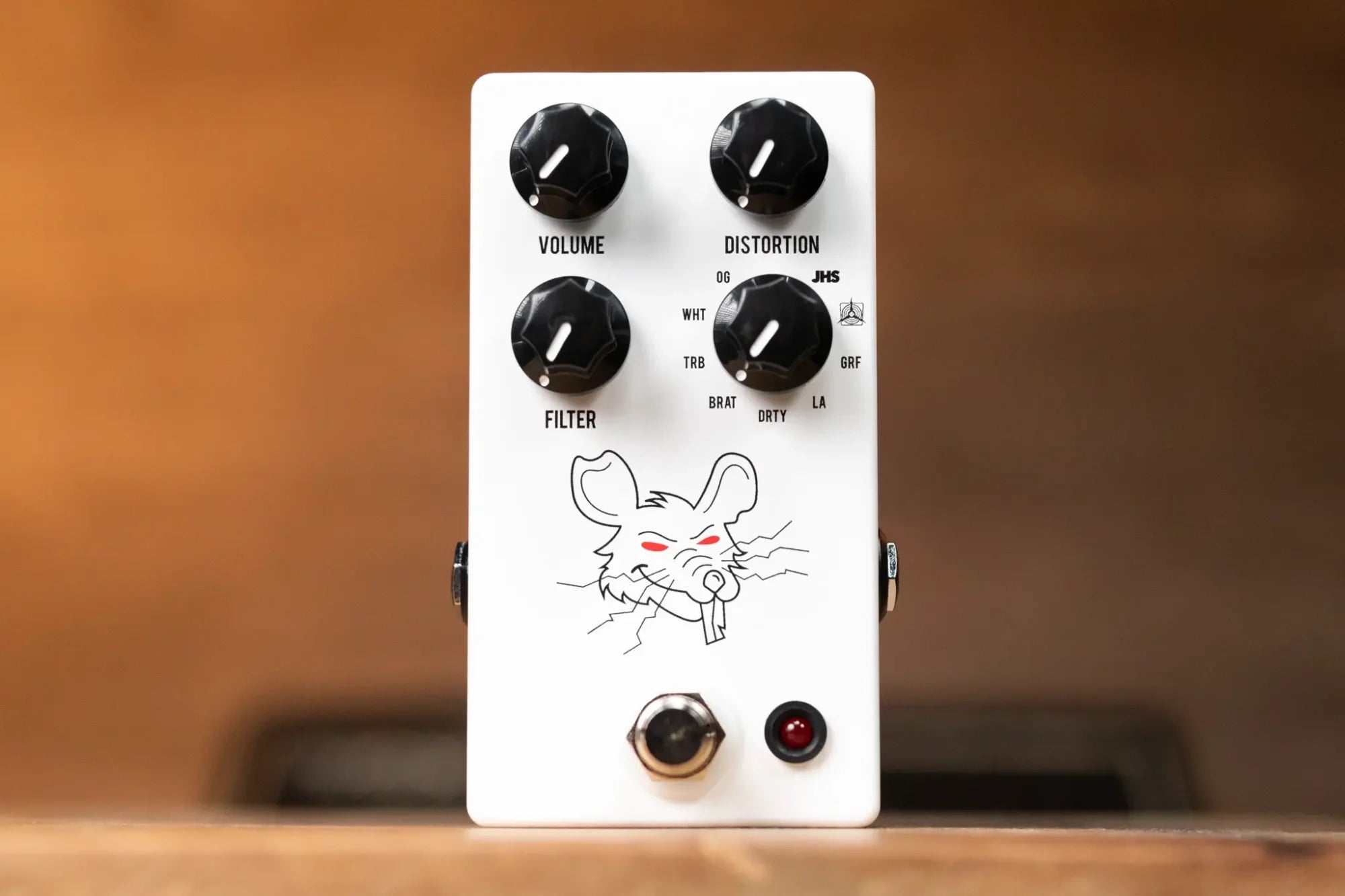
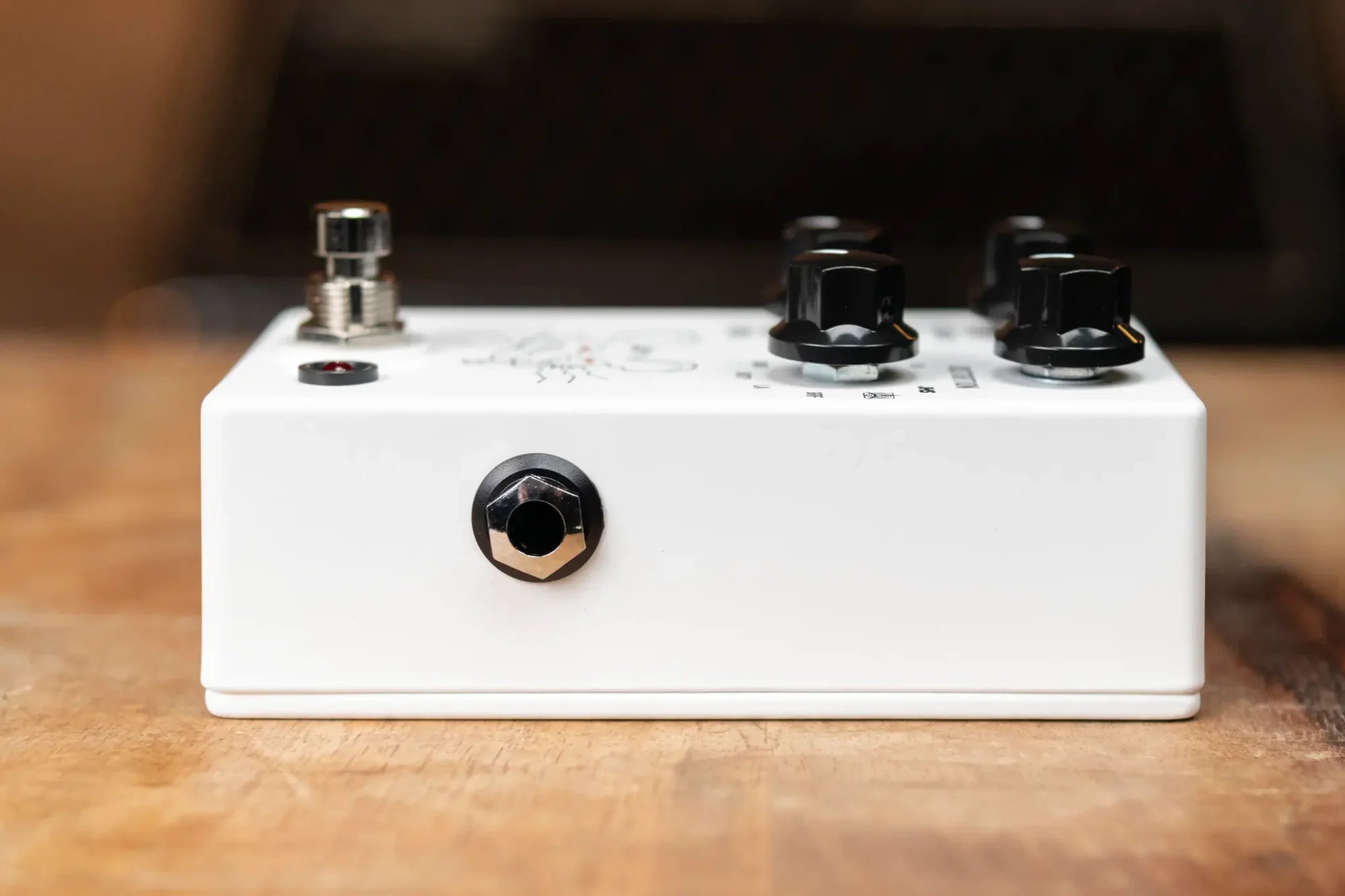
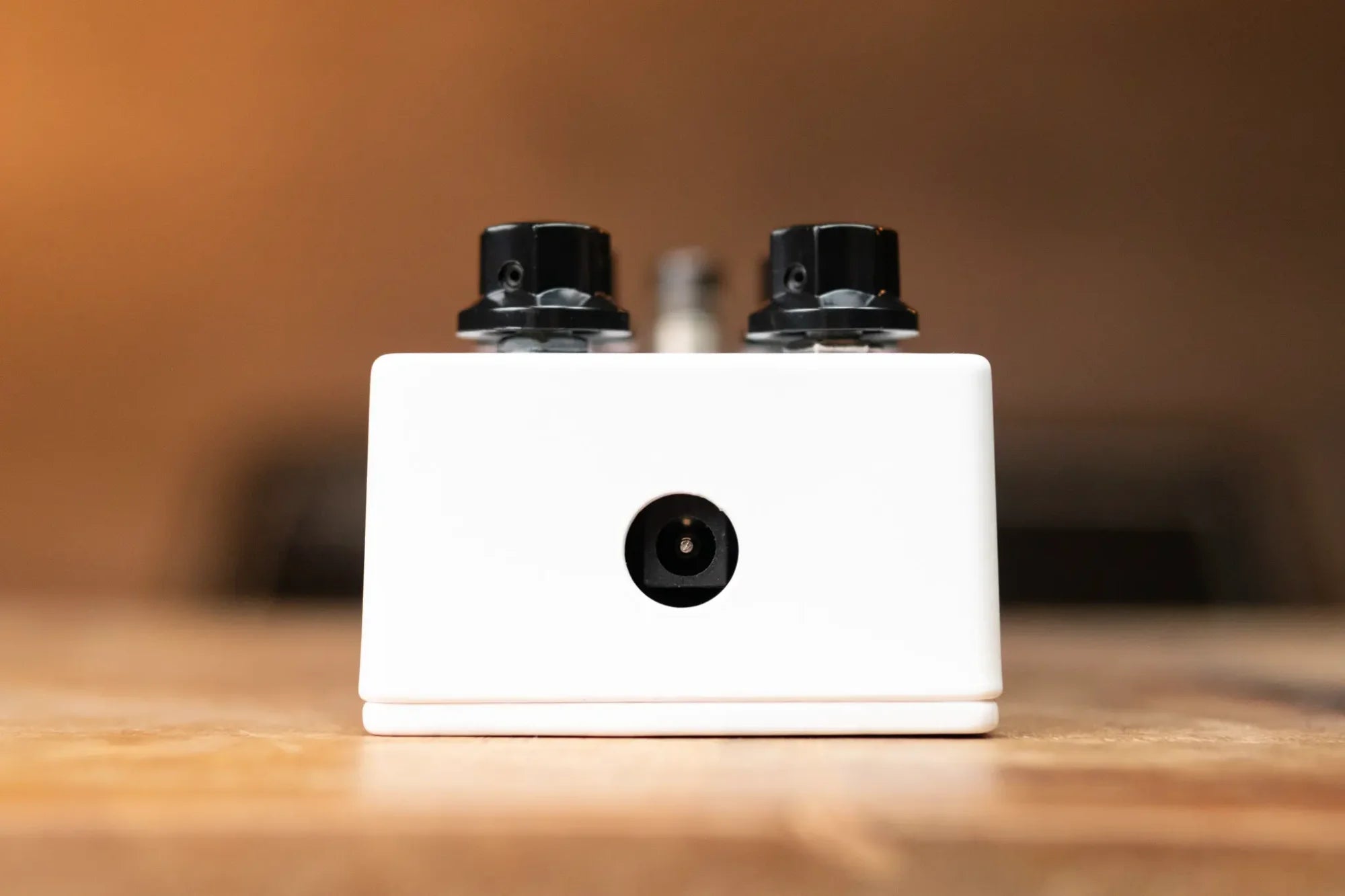
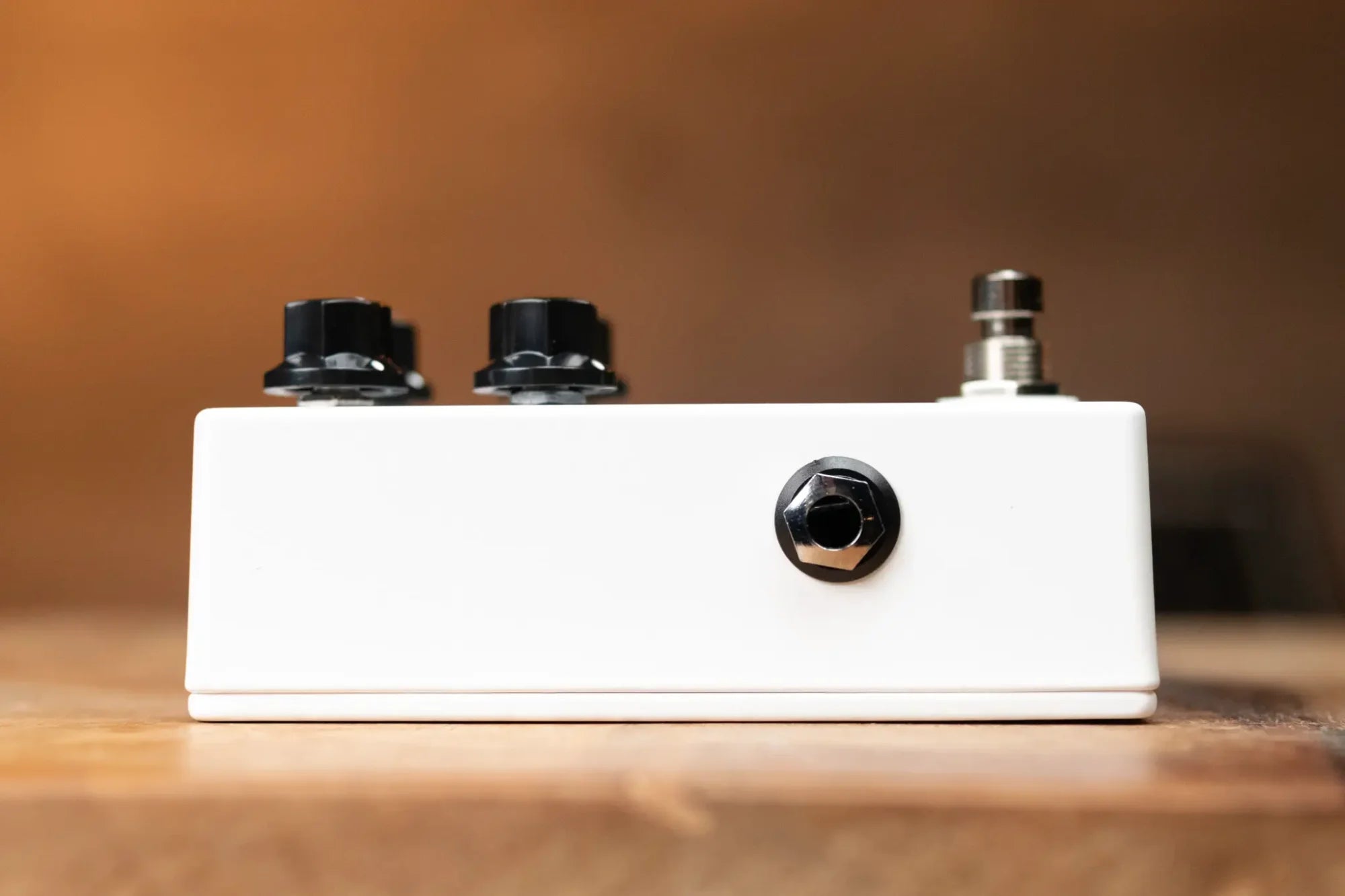
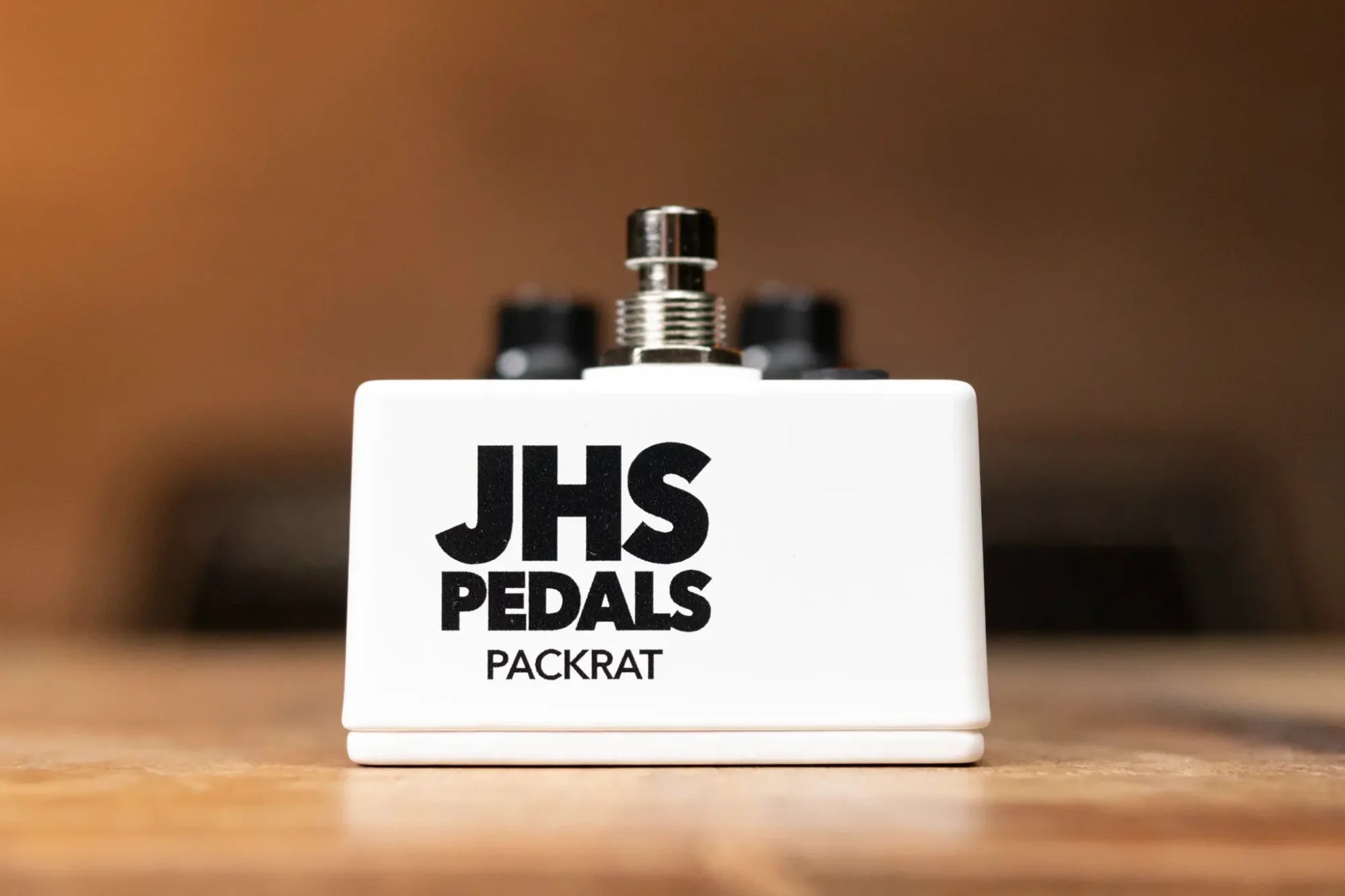
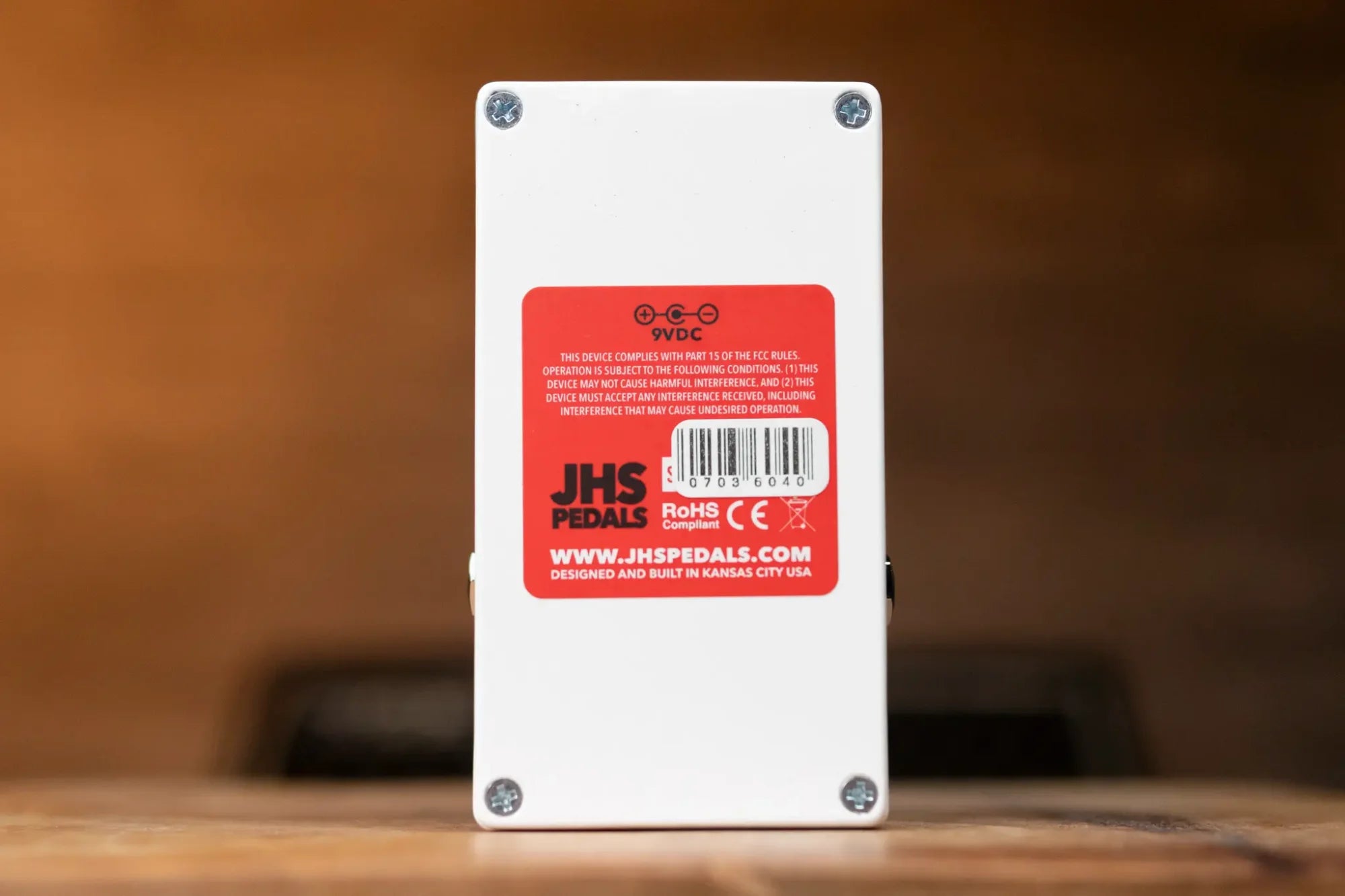
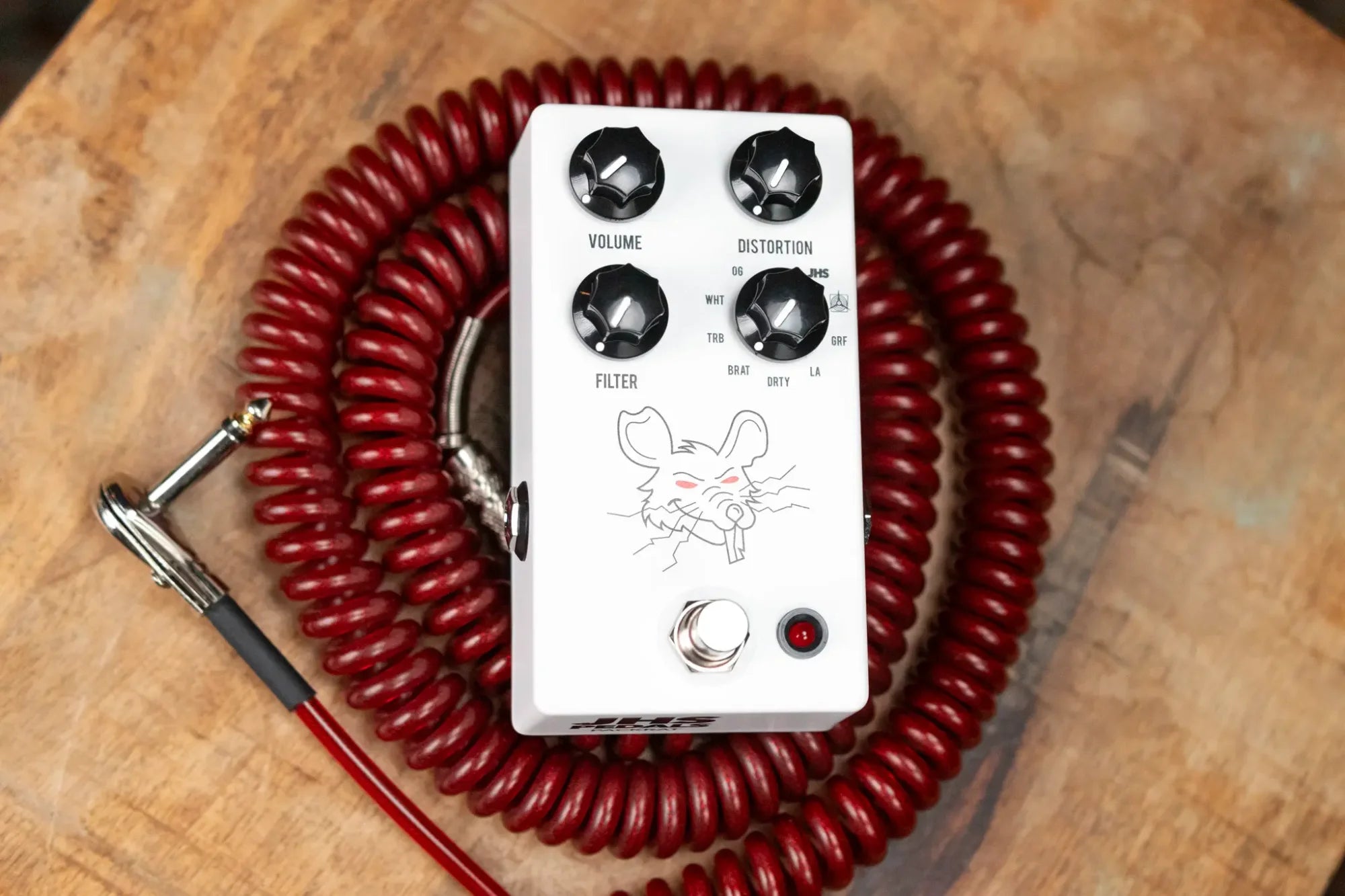
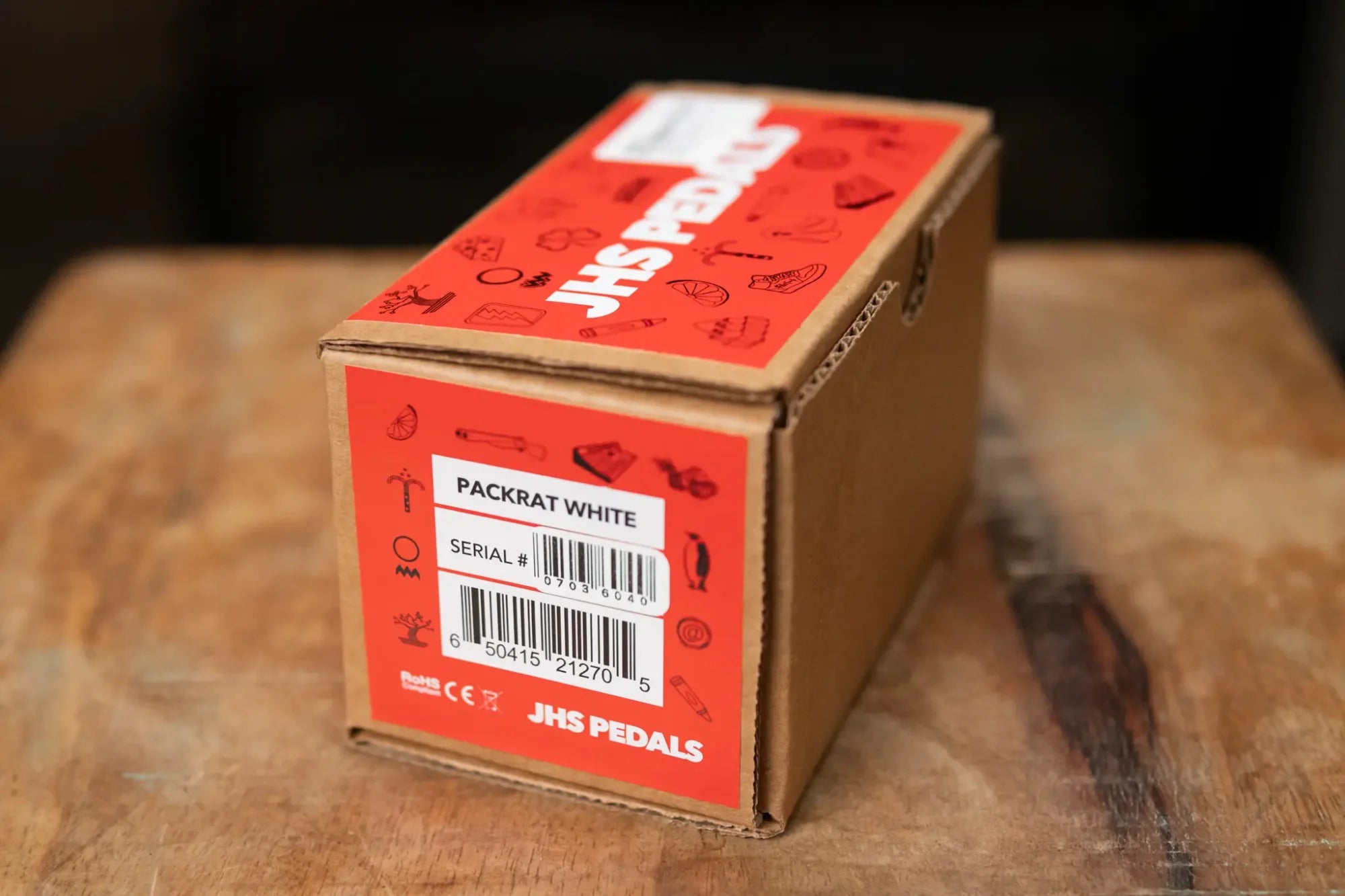
JHS Packrat White Distortion Pedal
Hurry, only 2 items left in stock!
$249.00
Secure Checkout


Couldn't load pickup availability
Pickup available at 2520 W Main St
Usually ready in 24 hours14-day returns
Changed your mind? Return it undamaged within 14 days.
Fully insured shipping
Ships from Rapid City, SD. Free on orders over $100.
11,000+ five-star reviews on Reverb
Trusted by players nationwide since 1963.
Ships same or next day
Order confirmed fast. Tracking sent immediately.
These brand new JHS pedals will ship insured and inspected from our Rapid City, SD location.
Buy risk free with our 14 day - full refund, less shipping, return policy. Check out our shop policies for more details.
It's the same distorting rat as before but now in white!
In 1978, one of the most versatile distortion pedals of all time was invented in Kalamazoo–the ProCo RAT. Scott Burnham and Steve Kiraly had the idea after playing, repairing, and modifying all distortion pedals on the market. They wanted something that didn’t exist yet at MXR, DOD, or BOSS, a pedal that could go from overdrive to distortion and all the way to fuzz. By 1979, Scott perfected the circuit in his rat-infested basement workshop. The rest is history.
The PackRat is the ultimate tribute to 40+ years of RAT evolution and its impact on guitar’s sound. Artists from every genre have used this iconic and unassuming black box to create their tones, including Nirvana, Pink Floyd, Metallica, REM, the Eagles, Jeff Beck, and Radiohead.
The PackRat uses the same unique digital runway system featured in our other multimode pedals (Muffuletta and Bonsai) to direct the paths of 261 components through 40 individual switches. This means when you choose one of the nine legendary modes, you are playing fully analog circuits that perfectly replicate that mode down to the aging components. If you purchased these nine hard-to-find pedals on the used market right now, you’d pay around $4k. The Pack Rat at $249 saves you thousands!
Controls
Using the PackRat is straightforward. “Volume” adjusts the overall volume of the pedal. “Distortion” lets you raise and lower the amount of gain or distortion. “Filter” allows you to brighten or darken the sound of the overall effect, acting as a simple low-pass filter. The “Mode” knob is a rotary switch that clicks between each of the nine legendary RAT versions. As you change the mode, the analog circuitry is rewired between different values of resistors, capacitors, diodes, and op-amps.
The PackRat Modes
1. The OG v1 (79-83)
The OG is a perfect recreation of the first line of RATs ever made. Early v1s are also known as the Fringe Logo and can be identified by the word RAT having a slight fringe graphic on the typeface. The v1 also has small silver capped knobs and a Tone knob instead of the more familiar Filter label. From a circuitry standpoint, the v1 and v2 Big Box models are practically identical except that the v1 Tone control increases treble as you turn clockwise while the v2 Filter control decreases treble. In the OG mode, you are playing the exact circuitry of my 1979 v1 Fringe model, including accurate Tone control rotation and taper. You should know the v1 and v2 are the same circuit. Simple adjustments to the Tone/Filter control can achieve identical sounds from each unit. I know super nerds will ask why we didn’t include a Bud Box mode. Basically, I’d consider the Bud Box RAT to be a v1 because it is nearly identical, other than having an input buffer and a few extra parts.
2. White Face v3 (84-86)
In 1984, the RAT transitioned to a smaller square enclosure with a new white rectangle logo. The word RAT was in all black caps inside the white rectangle–hence the “White Face” nickname. In 1986, this same model had a logo change that inverted the white and black colors, resulting in the more familiar white rectangle outline and font on a black enclosure. This “White Face” model has become a holy grail RAT and even spawned a reissue in the nineties. The irony is that it’s the same exact circuit as the previous Big Box V2, the 1986 “Black Face,” and the 1989 RAT2. The “White Face” V3 update was purely cosmetic due to screen printing errors that needed to be solved. ProCo knew that the world wanted smaller pedals as brands like BOSS, DOD, and Ibanez gained increasing market share. They wisely cashed in on the trend. Why would I put this particular version in my PackRat if it’s not different from the OG? For one, nostalgia is a powerful thing. Second, this mode switches to the reverse orientation Filter control with an entirely different feel and experience. It also widens the sweet spot for the most beloved RAT tones.
3. Turbo v5 (89)
The heart of the RAT tone comes from symmetrical hard clipping. A simple amplifier circuit amplifies the signal and pushes it across a pair of clipping diodes. These diodes clip off the top of the waveform and create square wave distortion. Every RAT until 1989 utilized silicon diodes, like the DOD 250 and BOSS DS-1, but the new Turbo RAT used LEDs. This technique was a first in pedals and offered a completely new RAT experience. The silicon diodes in previous versions have a lower forward voltage, leading to a faster and more extreme clipping of the waveform. This type of diode creates a very saturated tone. LEDs have a much higher forward voltage, so they don’t activate or clip the signal as fast or as hard. It takes more signal to reach the clipping point, creating more touch sensitivity. It is also worth noting this model was the first RAT to offer the sloped enclosure we see today.
4. BRAT v6 (97)
In 1997, ProCo got into the budget pedal game by releasing the BRAT and the Guitar Center exclusive Roadkill. So far, these identical circuits with different but very 90s grunge aesthetics have the most changes in the evolution. This design added an input buffer circuit and soft clipping (inside the op-amp) on top of the hard clipping of previous RATs. We also see a return to the opposite taper/rotation Filter control and several capacitor value changes that alter frequency response and distortion characteristics.
5. Dirty v7 (04)
In 2002, ProCo released a 2-in-1 RAT pedal called the Deucetone. This pedal allowed you to have two completely separate RATs and activate them independently or stack them together. It also introduced two brand new sounds into the RAT topology–“Clean RAT” and “Dirty RAT.” Due to the popularity of the “Dirty RAT” mode, they released it as a single pedal called You Dirty RAT. This circuit utilizes germanium diodes in the symmetrical hard clipping section. This gives the most saturation and waveform clip-off of any version to date. In addition to the diode changes, this model had several different capacitor value changes, which led to a different distortion character and feel.
6. LA (86)
In 1986, Ibanez released the 10 Series, which included three RAT style pedals. The Super Product and Fat Cat were traditional RAT-style pedals, while the quirkier LA Metal was, in my opinion, one of the best modified RAT circuits of the eighties. It includes a great input buffer, several key capacitor changes for frequency response, and no clipping diodes. The distortion is produced by overloading or “clipping the rails” of the op-amp. You may not play LA metal, but I promise you’ll love this mode!
7. Landgraff MO’D (99)
Between 1999 and 2000, John Landgraff started building pedals by hand in Pensacola, each with a unique swirl paint job and soldered point-to-point. John’s pedals gained a reputation for sounding amazing and remain the true definition of boutique. Of all his releases, my favorite was a distortion pedal called the “MO’D,” a distant cousin of the RAT and a fantastic pedal in its own right.
8. Caroline (10)
A few years after starting JHS, I purchased a fascinating distortion pedal from a brand new company in South Carolina. I remember jumping on the phone and geeking out with the designer and head of the company, Philippe Herndon. We talked about the circuit, his love for RATs, and his clever take on the circuit. That pedal was called the Wave Cannon, and when I started the PackRat project, Philippe was obviously the friend I needed to bring along for the ride.
9. JHS Mode
In 2003, I managed a tiny guitar shop in Northwest Alabama. One day, a man walked in wanting to sell a vintage Small Box RAT. When the shop’s owner said he wasn’t interested, I said I was and bought that RAT for $15. This event led me down the pedal-collecting rabbit hole. That pedal stayed on my board for a decade. When I started modifying and building pedals in 2007, I opened it up and modded it to give a different kind of sound. That modification led to the now discontinued JHS All American and the JHS “PackRat” mod we performed on thousands of RAT pedals from 2008-2018. The JHS Mode lets me keep what makes the RAT unique and add in a few of my favorite mods.
PACKRATWHITE
JHS Packrat White Distortion Pedal
$249.00
Customer reviews
11,000+ Five-Star Reviews On Reverb
What players say after the guitar arrives
“This is a beautiful guitar…appreciate the free setup and quick ship! Would purchase from this seller again…THANKS!”
“Thank you too for a wonderful experience and an amazing guitar. I appreciate the quick shipment and great customer service.”
“Very fast shipping, arrived in perfect condition, extremely well set up, no adjustments needed at all! Plays and looks great, exactly as advertised.”
“Fast shipping, and great communication from the seller. Pedal arrived quickly and was packaged really well. Would not hesitate to buy again.”
Very well packed! Would be happy to do business again! Thanks!
“Another masterpiece from Taylor. Great service and communication from Haggerty’s crew. Thanks!!!”
“Beautiful guitar, easy txn! Thank you so much! Looking forward to playing this guitar far into the future.”
“Fast shipping, great pedal. Buy with confidence these guys are great to work with!”
“Great shop! Awesome price, super fast shipping, and great packaging of an awesome new pedal! Thanks!”
Frequently Asked Questions
Do you set up every guitar before it ships?
Yes. Every guitar that leaves our store has been professionally inspected, set up, and signed off by the technician who worked on it. You will find a signed checklist inside the box when your order arrives.
How accurate are your condition descriptions?
We treat condition grading as a contractual promise, not an approximation. When we list something as excellent, that reflects a specific, consistent standard we apply across every instrument. We encourage you to call us before purchasing if you want a detailed in-hand description of any specific guitar.
Can I call and speak to someone about a guitar before I buy?
Yes, and we encourage it. Our team are working musicians, not order-takers. Call us at 605-348-6737 and ask about any instrument in our inventory. We will physically pull it off the wall and describe it to you in detail.
What is your return policy?
We offer a 14-day return policy if you change your mind and the item is returned undamaged. You are responsible for return shipping costs.
Do you offer financing?
Yes. Financing options are available at checkout. Monthly payment options are designed to make high-ticket purchases more accessible without requiring full payment upfront.
How do you ship instruments?
Every instrument ships fully insured from our store in Rapid City, South Dakota. We offer free shipping on all website orders over $100. Guitars are packaged to survive transit, properly cased, braced, and protected.
Are you an authorized dealer?
Yes. We are an authorized dealer for Taylor, Martin, Gibson, Fender, and many other brands. We are currently the number one independent Taylor Guitars dealer in the world, an award we have received two years running for 2024 and 2025. We are also a Top 10 premium dealer for Martin, Gibson, and Fender.
Do you sell on Reverb and Amazon as well as your own site?
Yes. We are one of the top 15 resellers globally on Reverb, where we have accumulated over 11,000 five-star reviews. We are also one of the only independent premium dealers in the world authorized to sell Taylor and Martin on Amazon.
How long have you been in business?
Haggerty's Music has been open since 1963. Our store is located at 515 Mount Rushmore Road, Rapid City, South Dakota.
Do you offer instrument repair?
Yes. Our certified technicians handle everything from routine setups to full restorations across fretted, orchestral, and band instruments. Our team holds certifications from Taylor Guitars, Yamaha, and other leading brands. Learn more HERE.
What brands do you carry?
Our core guitar brands include Taylor, Martin, Gibson, Fender, PRS, Epiphone, Suhr, Eastman, Gretsch, Luxxtone, Novo, Jackson, Charvel, Legator, and Yamaha among others. These are also the most searched brands on our site, so each has a dedicated collection page.
Do you offer music lessons?
Yes. We offer music lessons. You can find out more HERE.
If you have any questions, you are always welcome to contact us. We'll get back to you as soon as possible, within 24 hours on weekdays.
-
Shipping Information
Use this text to answer questions in as much detail as possible for your customers.
-
Customer Support
Use this text to answer questions in as much detail as possible for your customers.
-
FAQ’s
Use this text to answer questions in as much detail as possible for your customers.
-
Contact Us
Use this text to answer questions in as much detail as possible for your customers.


